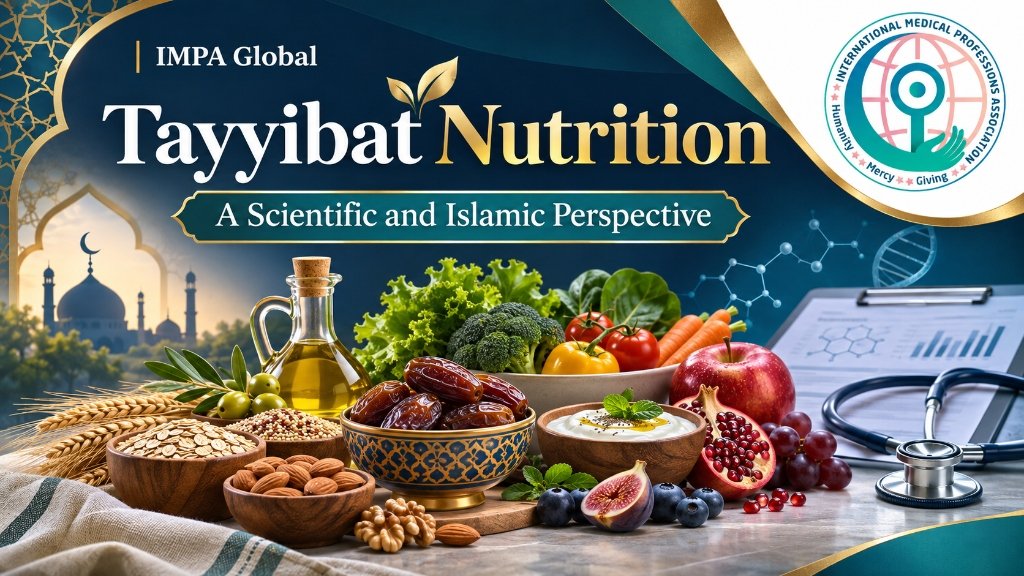
THE TAYYIBAT DIET IN THE BALANCE OF ISLAMIC SHARIA, MODERN MEDICINE, AND NUTRITION
Introduction: Dimensions of the Debate and Methodological Framework
The recent proliferation of novel dietary regimens claiming to replace conventional pharmacological therapies has generated intense debate among medical professionals and patients alike. Anecdotal testimonies of dramatic recovery or health decline frequently circulate on social media, yet individual anecdotes remain unverified without controlled, reproducible scientific methodology.
This study establishes an objective, evidence-based inquiry grounded in foundational Islamic jurisprudence (Usul al-Fiqh) and modern clinical science, ensuring that claims regarding health, healing, and nutrition are adjudicated by empirical facts rather than subjective claims.
1. Jurisprudential and Methodological Boundaries in Nutritional Guidance
In Islamic jurisprudence, determining Halal (permissible) and Haram (prohibited) food is the exclusive prerogative of divine legislation: ﴿Say: Have you considered what Allah has sent down to you of provision, and you have made [part of] it lawful and [part] unlawful?﴾ [Yunus: 59]. Prohibiting what God has permitted without definitive textual evidence constitutes a grave transgression.
Moreover, medical practice and prescribing are governed by verified professional competence and empirical proof. Seeking medical treatment (Tadawi) using proven pharmaceuticals is recommended and, in cases of life-threatening chronic disease, religiously obligatory to preserve life.
2. The Poultry and Animal Products Debate: Scientific and Veterinary Facts
A central contention of the Tayyibat diet is the demonization of commercial poultry, alleging that farmed chickens are saturated with injected female hormones and toxic feeds that provoke cancer and immune collapse.
Veterinary and agricultural science decisively refutes this myth: the rapid growth of modern broilers is the result of decades of selective genetic breeding and optimized feed efficiency (Zuidhof et al., 2014), not hormone injections, which are scientifically ineffective in birds, economically prohibitive, and internationally banned.
While indiscriminate antibiotic overuse in animal husbandry remains a legitimate global concern governed by mandatory pre-slaughter withdrawal periods, poultry meat remains a vital, affordable, and high-quality source of complete protein for global food security (Godfray et al., 2010; Marangoni et al., 2015).
3. Golden Principles of Healthy Nutrition in Revelation and Modern Medicine
Both divine revelation and nutritional epidemiology converge on foundational dietary wisdom: moderation (Wasatiyyah), diversity, and avoidance of gluttony: ﴿Eat and drink, but do not be extravagant﴾ [Al-A’raf: 31].
The Qur’an highlights foods endowed with exceptional nutritional and therapeutic qualities: pure natural honey with proven antimicrobial and wound-healing properties, mineral- and fiber-rich dates, polyphenol-dense extra virgin olive oil, and the high biological value of fresh fish and fermented dairy.
However, scripture presents these foods as general nourishment and holistic blessings, not as absolute mono-therapies meant to supplant targeted pharmacological interventions.
4. Scientific Strategies for Chronic Disease Management and Lifestyle Modification
Evidence-based medicine recognizes lifestyle modification—caloric moderation, weight optimization, reduced intake of ultra-processed foods (UPFs), and structured intermittent fasting—as indispensable foundations in managing type 2 diabetes, metabolic syndrome, and cardiovascular disease.
Nutritional interventions dynamically modulate the gut microbiome, enhance insulin sensitivity, and mitigate systemic low-grade inflammation. Yet, nutritional support serves as a synergistic adjunct, not an absolute replacement, for individualized pharmacotherapy.
5. Clinical Misconceptions and Dangerous Pseudoscientific Practices
The most perilous practice associated with extreme alternative dietary systems is urging patients suffering from insulin-dependent diabetes, hypertension, heart failure, asthma, or epilepsy to abruptly discontinue their prescribed medications.
Such arbitrary cessation has caused life-threatening diabetic ketoacidosis (DKA), hypertensive encephalopathy, and cardiovascular collapse. Binary moral labeling of everyday wholesome foods as 'pure' versus 'malignant' lacks clinical legitimacy.
6. Consensus Recommendations: The Four-Part Objective Synthesis
1. Validated and Supported: Principles endorsed by solid clinical science—namely, eliminating ultra-processed foods, reducing refined sugars and excessive calories, incorporating fasting protocols under medical supervision, and prioritizing whole foods.
2. Refuted and Rejected: Unsubstantiated claims contradicting veterinary and medical realities—specifically, the categorical demonization of poultry and dairy, the unverified assertion that hormones saturate standard poultry, and the moralistic reclassification of permissible foods as inherently toxic.
3. Under Scientific Review: Idiosyncratic dietary hypotheses that remain unverified by randomized controlled trials (RCTs), which must be subjected to formal clinical investigation before public dissemination.
4. Strict Medical and Sharia Warning: Abandoning prescribed, life-preserving medications or ceasing physician consultation based solely on dietary promises constitutes severe self-harm (Tahlikah), strictly prohibited under Islamic law and condemned by medical ethics.
Scientific and Jurisprudential References
1. Al-Muwafaqat by Imam Al-Shatibi.
2. Al-Bahr Al-Muhit in Usul al-Fiqh by Imam Al-Zarkashi.
3. Nihayat al-Sul by Imam Al-Isnawi.
4. Irshad al-Fuhul by Imam Al-Shawkani.
5. Majmu’ al-Fatawa by Ibn Taymiyyah.
6. Al-Turuq al-Hukmiyyah by Ibn al-Qayyim.
7. Zayed Encyclopedia of Jurisprudential and Legal Maxims.
8. The Lawful and the Prohibited in Islam by Dr. Yusuf Al-Qaradawi.
9. Reason and Science in the Qur’an by Dr. Yusuf Al-Qaradawi.
10. Abete, I., et al. (2014). Association between meat consumption and health outcomes. Circulation.
11. Daley, C. A., et al. (2010). A review of fatty acid profiles and antioxidant content in grass-fed vs grain-fed cattle. Nutrition Journal.
12. Godfray, H. C. J., et al. (2010). Food security: The challenge of feeding 9 billion people. Science.
13. Marangoni, F., et al. (2015). Role of poultry meat in a balanced diet aimed at maintaining health. Food & Nutrition Research.
14. Zuidhof, M. J., et al. (2014). Growth, efficiency, and yield of commercial broilers from 1957 to 2005. Poultry Science.