Genicular Nerve Cooled Radiofrequency Ablation Can Provide Lasting Pain Relief in the Management of a Painful Knee
Largest Prospective Case Series Worldwide (256 Knees) — Presented at the British Orthopaedic Association (BOA) Congress, London
1. Background & Clinical Rationale
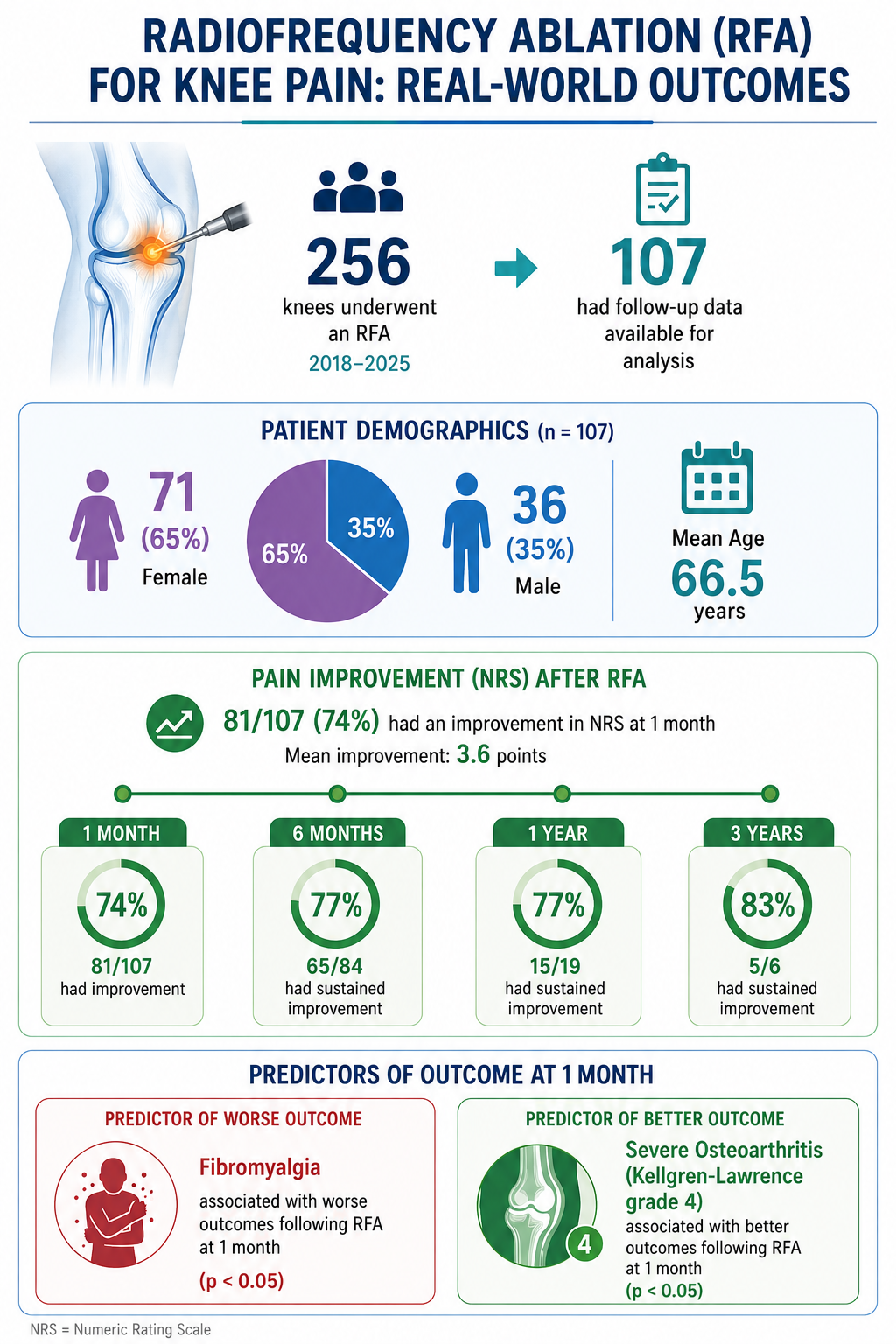
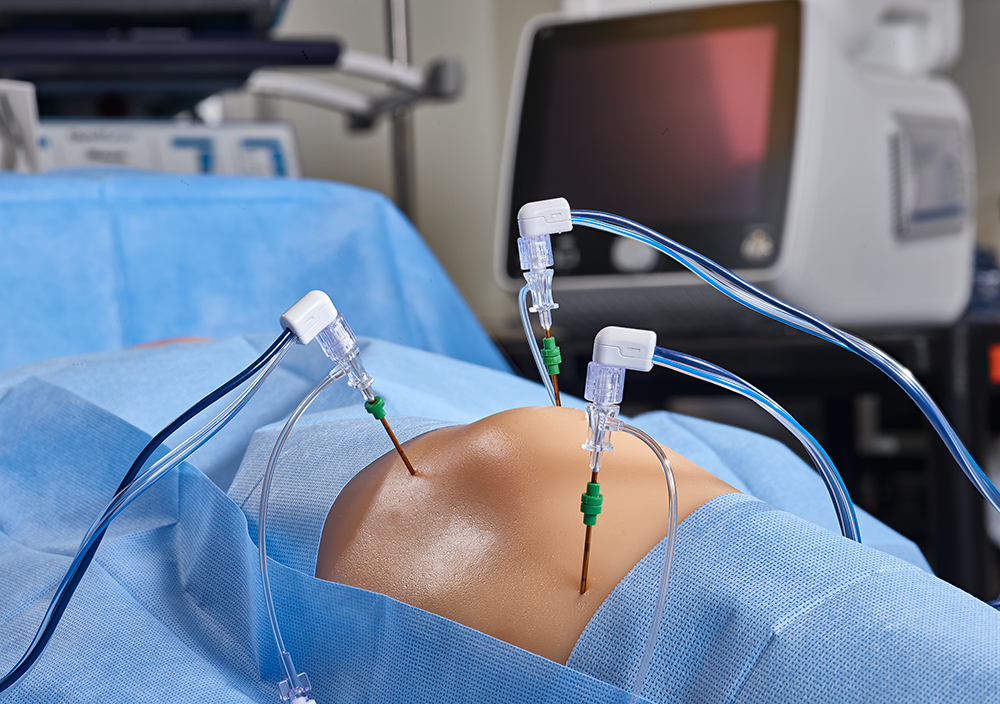
Cooled radiofrequency ablation (RFA) of the genicular nerve is an emerging tool in the management of painful prosthetic knee joints or in patients with osteoarthritis of a native knee where the patient is not a good surgical candidate. We assess the effectiveness of this treatment modality in the largest prospective case series to date. In addition, we present results of a unique technique of 4 needles for cooled RFA and 2 needles for radiofrequency pulsation not elsewhere described.
2. Methods & Patient Cohort
Outcome and patient demographic data were collected prospectively in our database and retrospectively analysed. RFA was performed by a single surgeon and nurse practitioner over a 7-year period (2018–2025). Patients rated knee pain on a numeric rating scale (NRS, 0–10) and were followed up monthly for 6 months and at 1, 2, and 3 years.

3. Clinical Results & Outcomes
Predictors of outcome: Severe osteoarthritis (Kellgren-Lawrence grade 4) predicted better outcome. Fibromyalgia was associated with worse outcome. Cooled RFA was performed to SL, MR, SM and IM nerves, with radiofrequency pulsation to IL to eliminate risk of permanent peroneal nerve injury.
4. Clinical Conclusion
Cooled RFA is a powerful tool in the management of painful knees, both native and prosthetic, and outcomes can be improved with careful patient selection. Patients who respond well have a high chance of sustained improvement up to 3 years post-procedure. Our unique technique contributes directly to the success and safety of this modality.